
Remembering Sanjeev Kumar (9 July 1938 – 6 November 1985)
one of Bollywood’s most versatile actors, on his birth anniversary today.
Lesser known facts about Sanjeev Kumar!
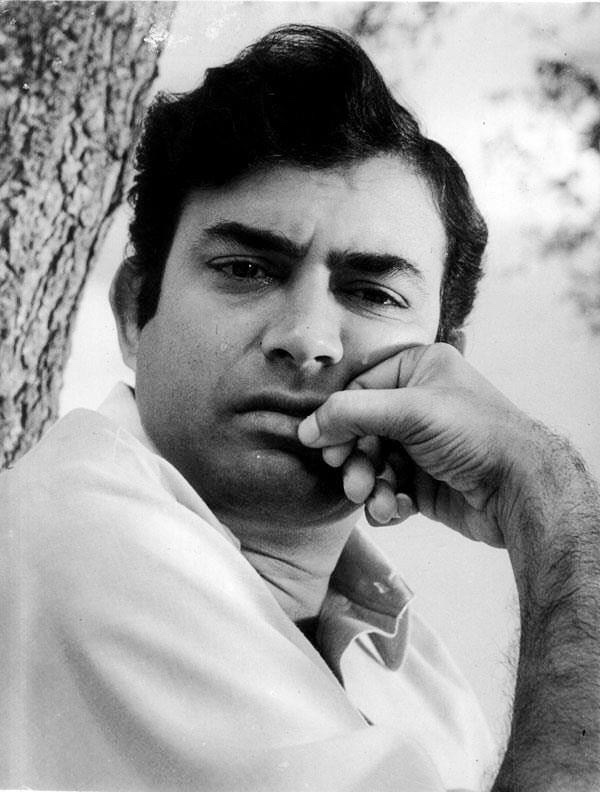
He debuted as a protagonist in 1965 in the film Nishan which was directed by Aspi Irani, which also featured Helen, Prem Chopra, and Nazima.
Sanjeev Kumar had a thing for taking up challenging roles. Proof being his role in Satyajit Ray’s Shatranj Ke Khilari, wherein he essayed the role of Mirza Sajjad Ali, a chess-obsessed nawab from Lucknow.
He has a name in regional films in many different languages which include Marathi, Punjabi, Tamil, Telugu, Sindhi, and Gujarati.
Sanjeev Kumar lived in Girguan in a chawl in Central Bombay, earlier but later shifted to an old building on Pali Hill and became neighbours with Dilip Kumar and Saira Banu and even Sunil Dutt and Nargis and Gulzar and Rakhee. However, he was so simple that he built a special room for himself in the two-bedroom flat in which he had all that he needed to live his simple life.
He played some of his best roles in Gulzar directorials. He did films like “Koshish” in which he played a dumb and deaf man whose wife played by Jaya Bhaduri is also a dumb and deaf woman. The two were so good that their roles fetched them National Awards for their performances. Other films he did for the living legend are “Parichay”, “Mausam”, “Aandhi”, a comedy like “Angoor” in which he played a double role and “Namkeen”.
His weaknesses? Extremely simple ones for a star like him. All he indulged in was a good Mercedes car, a packet of 555 cigarettes, some very good whiskey, and the family member of a vegetarian family loved some tandoori chicken and mutton or even fish after several rounds of drinking at the roadsides “dhabaas” on Linking Road after midnight.
His love life? The man first fell in love with Nutan with whom he did just one film and interestingly he proposed to her even though he knew she was a married woman. Her response you ask? She slapped him in public. Next, he fell for Hema Malini and apparently she too was willing, but it was her mother who put her foot down thanks to his drinking and his love for non-vegetarian food (like any other mother would in term of the drinking). It was Sulakshana Pandit, who was head over heels for him but he kept avoiding marriage for reasons of his own.
He was always dressed in white pants and a white kurta with matching white chappals.
Reportedly, the first time he was recognised as a good actor was in “Khilona”. In this film, he essayed a man gone mad but also madly in love with the heroine of the film, Mumtaz.
An interesting point I came across reports on him, Hari bhai had issues with being on time. BUT even after reaching several hours late to the sets, the great actor wrapped up his work in few hours which would otherwise take an entire day and then left for his evenings which he spent chilling with his close friends.
Another funny fact is that he was called ‘kanjoos’ and reportedly he was wrongly accused of this problem. He, in fact, gave without thinking and never let anyone know about his acts of charity. Sanjeev Kumar also worked for small producers without charging them any fee.
A creepy fact which is also very heartbreaking: Sanjeev Kumar once told a writer when he was with him in Bengaluru that no male member of the Jariwala family (his family) would live beyond fifty. “His father died when he was exactly fifty. His younger brother, Kishor Jariwala who was a failed music director died when he was forty-nine. His younger brother, Nikun Jariwala died when he was just thirty-six and Haribhai himself died when he was forty-six. Unfortunately, the man who was known for his older roles died at a young age. Sanjeev Kumar died on November 6, 1985, at the age of 47 due to a heart attack,” read a piece on a media house’ website.
BirthAnniversary #SanjeevKumar #Shikar (1968) #Khilona (1970),
Manchali (1973) #NayaDinNaiRaat #Koshish (1974), #Uljhan #Sholay (1975) Arjun Pandit (1976) #YehiHaiZindagi (1977), #Devata #Trishul #Trishna #PatiPatniAurWoh (1978), #BiwiOBiwi (1981) #Angoor (1982) #Hero #Vidhaata(1983) #AmmarAlavi #thegoldenageofbollywood #bollywood
RamTereKitneNaam (1985) #Qatl (1986)
 ThEagle News