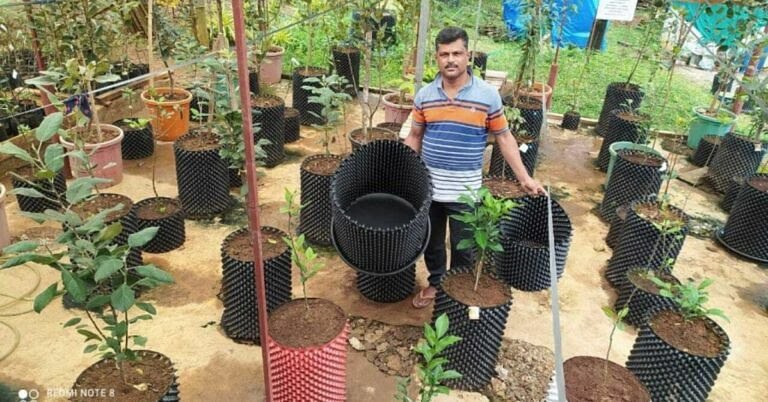
Kerala Farmer Grows Apple, Almond Trees in ‘Miracle Air Pots’ in Half The Usual Time

You might think that the best way to grow treesis directly on the ground, but Kattappana-native Bijumon Antony disagrees.

Even growing trees on land can lead to tangling of roots and thereby slow blooming. All the nutrients we provide at the beginning go directly to the roots. ‘Air pot gardening’ is a method to avoid this by planting saplings on pots full of holes, which can be placed anywhere,” says the owner of an exotic fruit farm ‘Miracle Farms’ in Idukki, Kerala.

Other than being a farmer, Bijumon also manufactures and sells his own air pots. He says that this method of farming is prevalent in foreign countries like Israel, China and Japan, and gives faster and better yields. “But due to the high price of such pots in India, most farmers don’t take up the technique here. One pot costs an average of Rs 650 on major e-commerce platforms,” he says.

Bijumon was a photographer by profession and used to run a studio near his home. Since he hails from a farming family, the 47-year-old had always engaged in agriculture as a secondary activity. But it’s been only five years since Bijumon completely turned his focus to agriculture.

“I started off as an integrated farmer, breeding goats, cows, black fowls, and fish, as well as growing several crops including cardamom and pepper. I constantly read and researched about new types of farming suitable for the climate of Kerala. Six years ago, I stumbled upon the idea of cultivating exotic fruits, of which certain varieties can withstand the heat and rain of the state,” the farmer says.

bijumon antony kerala farmer started with integrated farming grew varieties of fish

Bijumon with his fish harvest.

Today, Bijumon grows fruits like apple (25 varieties), orange, peach, pear, almond, walnut, and apricot at Miracle Farms. Their saplings, grown completely in air ports, are available for purchase on the farm and can also be couriered across the country.

What are air pots?

“Air pots are wide sheets made from flexible plastic with cone-shaped indents. The indents have small holes at the tip. The sheet comes with a few screw-like fasteners and a flat round-shaped piece made of plastic screen at the bottom,” says the farmer.
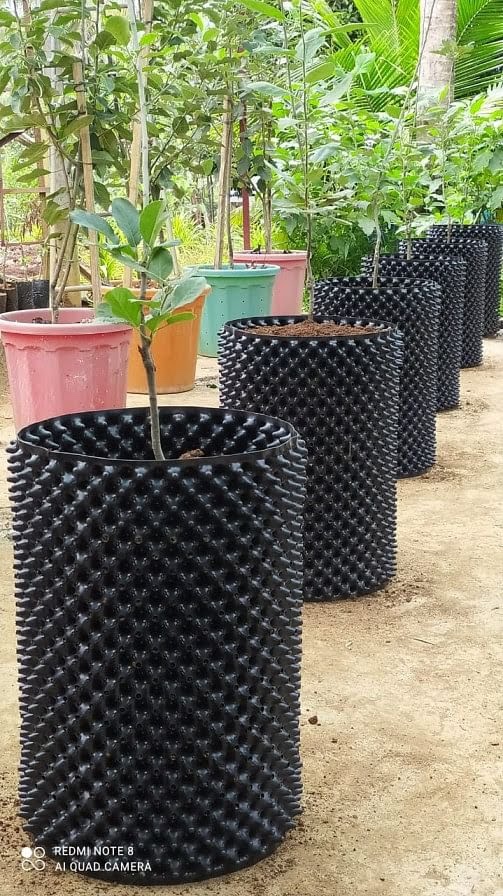
How the air pots look like.

The pots can be assembled by wrapping the mat on the bottom piece. The advantage here is that more air passes through the available holes, thus benefiting the plants. Also, when the roots come out exposed to the atmosphere, they dehydrate and new roots are produced. Those will be fibrous roots that require less nutrients. Rest of the benefits of the soil go to the plant directly,” he explains.

Bijumon initiated this method after planning to get into apple farming. He purchased a few pots online and says the results were great. But he couldn’t make decent profits as the pots were quite expensive, which led him to manufacture his own pots.

air pot garden of kerala farmer bijumon antony in kattappana

Bijumon in his air pot garden.

With the help of a Coimbatore-based company, he now makes them in different sizes. In the beginning, people visiting his farm were left intrigued by the pots and asked him to get them a few. This eventually turned into a business and his pots are named ‘Miracle Pots’.

The price range of the pots is Rs 50 – Rs 1,000, and to grow an average tree, a pot of Rs 350 is more than enough. If purchasing wholesale, the price comes down. People usually come here and purchase directly. I also courier them to all parts of the world,” say the agripreneur.

Other than growing trees, the pots can also be used for composting. As the bacteria grows faster due greater presence of oxygen through the holes, composting takes fewer days if done in air pots, he assures.

bijumon antony growing exotic fruit trees in air pots

Average size of a pot that can bring up a full tree.

Bijumon says that air pot gardening helps plants stay fresh and provides them with all their nutritional needs. It gives results within half of the prescribed time and requires less labour. Another notable advantage is that the trees grown this way can be commuted to any other spot easily, without damage. null

“All you have to do is purchase pots of required size, fill it with soil, and plant the saplings. Occasional watering and fertilising is enough. Everything else is similar to normal gardening,” he says.

He is all set to expand his production and make the pots available in local farm shops. Bijumon, who has studied till Class 8, is accompanied by his sons, who provided technological support by starting a website and YouTube channel to popularise this method of farming. 

bijumon antony receiving state award for best farmer from cm pinarayi vijayan

Bijumon receiving Kerala State Government’s Karshaka Tilak Award from CM Pinarayi Vijayan.

The farmer has received the state government’s Karshakothama Award in 2019 and the Karshaka Tilak Award in 2020.

14 Traditional Markets In India You Have To Explore

Featured Image

Elephant toys in the shop at Indian market in Goa 

India has a rich culture and history, and this is often best displayed in the many traditional markets in India. In a world where buying anything is just a click away, these bazaars and markets are like an echo of an older era that still continues to exist. 

These often labyrinthine markets have been a vital part of Indian culture, trade and social life for centuries, through the Mughal and British eras. Whether you are a shopaholic or not, you still need to experience the vibe of these markets. The Indian marketplace is often chaotic and bustling, there is always something going on. The sights, sounds and smells are all stimulating and unique to the beautiful chaos that is India. They are also an excellent place to buy everything from clothes to jewellery, fruits and vegetables, street food and much more – all in one place. Just remember, bargaining is part and parcel of this experience!

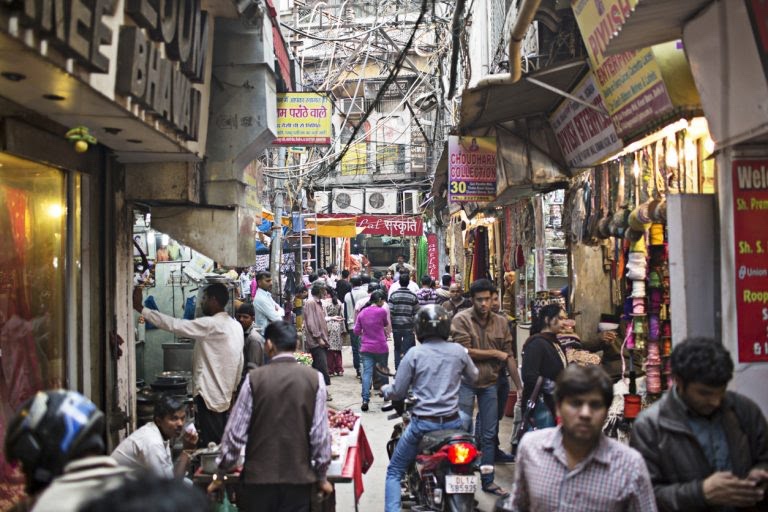
1. Chandni Chowk, Delhi – Dating Back To The 17th Century

Chandni Chowk is one of the oldest markets in India. This busy market dates back to the 17th-century when it was established by the Mughal Emperor Jahangir and his daughter Jahanara. The endless shops sell all kinds of things, such as jewellery, perfumes, traditional clothes, wedding paraphernalia, leather goods, electronics, spices, antiques, souvenirs and knick-knacks, as well as delicious food. Don’t miss the Khari Baoli, the largest wholesale spice market in Asia. 

Also Read: A local’s guide to the best things to do in Delhi

2. Devaraja Market, Mysore – A Bustling Market For Everyday Needs

Located just off the central Sayyaji Rao Road in Mysore, this covered market dates back to the time of Tipu Sultan. It was further expanded by Chamaraja Wodeyar IX in the late 1800s. In this lively bazaar, you’ll find all kinds of items such as flower garlands, incense, spices, household articles, mounds of turmeric and vermilion, lush green betel leaves, vegetables, fruits and more, each in its own specific section. Along the outer perimeter, you will find some famous sweet shops specialising in the iconic Mysore Pak.

3. New Market, Kolkata – Over 2000 Shops

via Wikimedia Commons

Previously known as the Sir Stuart Hogg Market, this historic shopping destination on  Lindsay Street was founded in 1874. Initially, the enclosed market was built exclusively for Calcutta’s British residents. Today the market is one of the most popular trading hubs in the city and has over 2,000 stores that sell all sorts of items from clothing to electronics, food, flowers, utensils, leather bags, and much more. It has survived various floods and fires and is still continues to be in use.

4. Floating Vegetable Market, Srinagar – Get Your Fresh Fruits And Veggies On A Boat

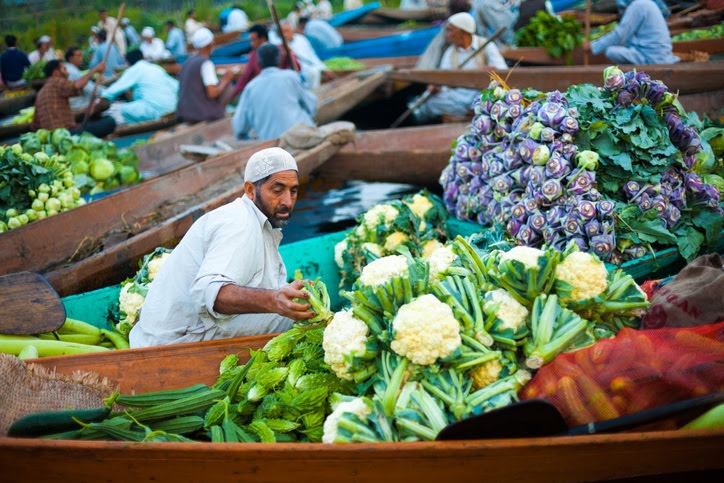
The picturesque Dal Lake in Srinagar is famous for its floating vegetable market. This one-of-its-kind market is open between 5 am to 7 am every day. Vendors gather on the lake in traditional Kashmiri boats, known as Shikara, to sell fresh fruits and vegetables as well as wood carvings, saffron and other local items that appeal to tourists. It is now mostly tourist-centric; and huge crowds gather here each morning (usually on boats of their own) to experience this unique market. 

5. Laad Bazaar, Hyderabad – A No-Vehicle Zone

Situated beside Hyderabad’s famous Charminar, Laad Bazaar is a historic market that sells just about everything; sarees, perfumes, and silverware, are just a few of the things you’ll find here. However, it is perhaps best known for its variety of bangles, especially stone-studded and glass bangles, and for its pearl jewellery. Just keep in mind that the bazaar is set in a narrow alley, where no vehicles are allowed, and it can get quite crowded.

6. Ima Keithel, Imphal – Run Entirely By Women

via Flickr

Located at the centre of Imphal (the capital of Manipur) is perhaps the only market in the world run entirely by women. The market dates back to the 16th-century, and is also popularly known as the ‘Mother’s Market’. Thousands of women traders sit here and sell everything from local produce to clothes, handicrafts, utensils, and more. 

7. Johari Bazaar, Jaipur – A Jewellery Paradise

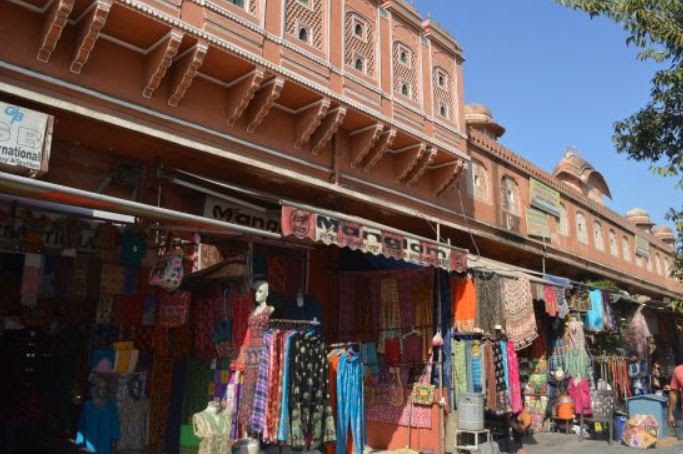
Johari Bazaar in Jaipur is famous for its jewellery, not surprising for a place whose name literally translates to “jeweller’s market”. It is located near the historic Hawa Mahal, making it the perfect place to visit while sightseeing. Apart from its jewellery, you will find lots of textile shops selling traditional Rajasthani wear as well as handicrafts. Johari Bazaar is usually on travel bucket lists of must-visit places in Rajasthan. 

8. Chor Bazaar, Mumbai – Anything And Everything

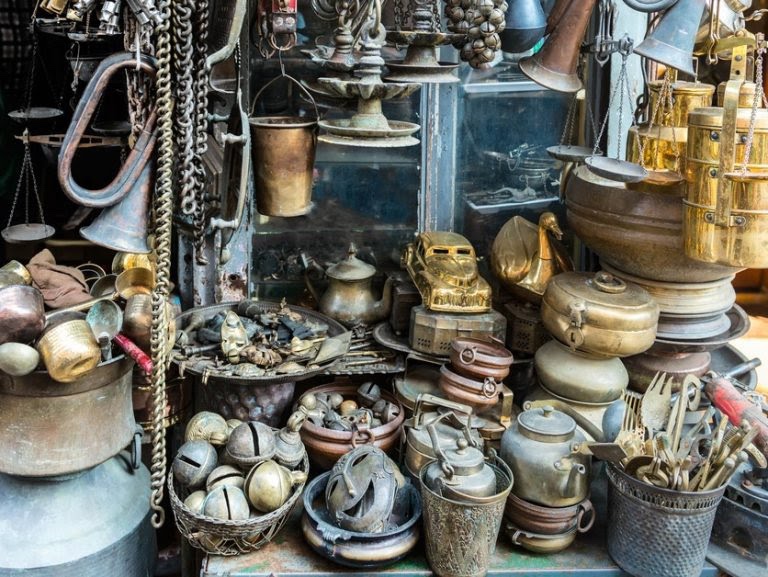
Once known as “Shor Bazaar” (or noisy market), this famous market in Mumbai was renamed Chor Bazaar (which translates to thief’s market) due to mispronunciation by British colonists. It is full of stalls selling almost everything you could think of –  handicrafts, bronze statues, vintage gramophones, clocks, lamps, furniture, trinkets, Bollywood posters, authentic (and not so authentic) antique items, and much more. 

9. Jew Town, Kochi – Indulge In History While You Shop

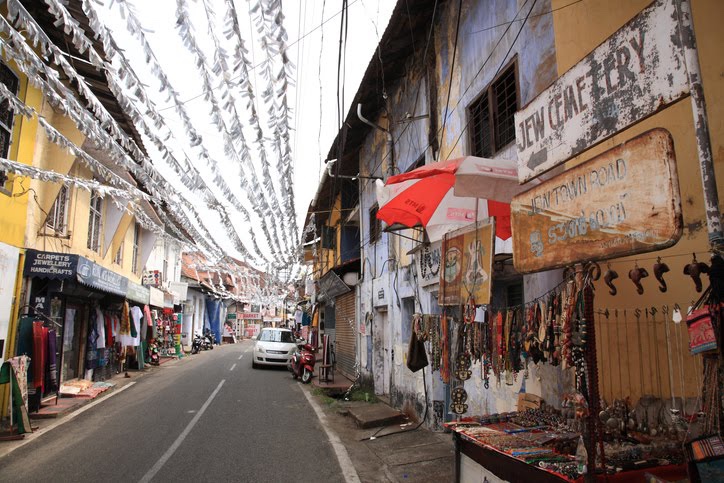
This market in the Mattancherry area of Kochi dates back to the 16th-century. Lined with neat colonial-era Portuguese-style buildings and narrow streets, the shops sell everything from curios to antiques, handicrafts, perfumes, jewellery and spices. Many of the shopkeepers also descend from a long line of Jewish families who have lived here for generations and are often very knowledgeable about the area’s history. 

10. Meena Bazaar, Delhi – India’s First Covered Market

Though Meena Bazaar is considered a part of Chandni Chowk, in Delhi, it deserves a special mention. It was built by the Mughal emperors over 300 years ago, and was the first covered bazaar in India. Located between Jama Masjid Kalan and Dalan, near the Red Fort, it is also a popular place to go wedding shopping; as it sells everything – from sarees to jewellery – that you would need for the big day.

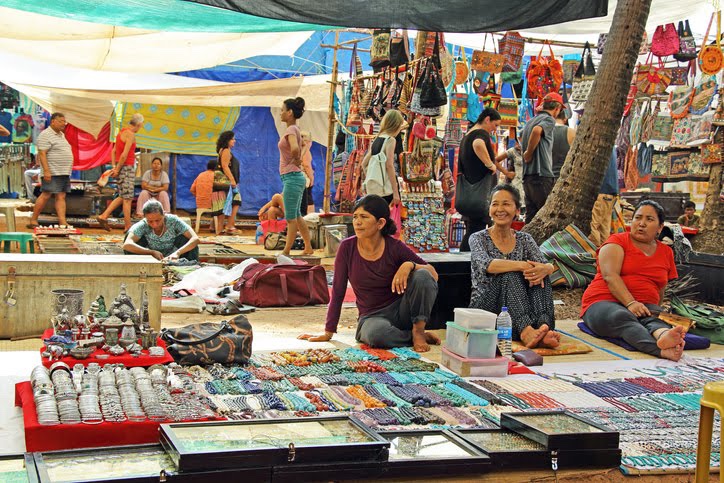
11. Flea Markets, Goa – Colourful With A Hippie Vibe

Goa’s beaches are famous (among other things) for their flea markets. They date back to the 1980s when they started as “hippie exchanges” where the foreign tourists sold their possessions. Now they are full of stalls where both locals and foreigners sell clothes, accessories, handicrafts, souvenirs, and more; all at dirt-cheap prices. The Anjuna Flea Market held on Wednesdays, and the Arpora Saturday Night Bazaar are some of the most popular markets. Also, visit the more authentic Mapusa Friday Bazaar where women from nearby villages gather to sell homemade products. 

Also Read: North Goa Vs South Goa – Which is the best for you?

12. Sarojini Nagar Market, New Delhi – For The Fashionistas

Everyone who enjoys fashion must visit this iconic spot in New Delhi. Sarojini Market is one of the most popular destinations in Delhi that has an awe-inspiring range of clothing and accessories at majorly discounted prices. It is the best place to go budget shopping where you’re sure to get your hands on the trendiest designs. Sarojini Nagar Market is also known as ‘S. N.’ in short by locals and residents. It was set up in the 1950s as a local market place to cater to the daily requirements of the Sarojini Nagar Government Colony residents. It is a pedestrian-only zone where you can freely walk around as you browse through all the shops. Around Sarojini Nagar Market you will find several smaller markets such as Babu Market, Central Market and ‘Subzi’ Market.

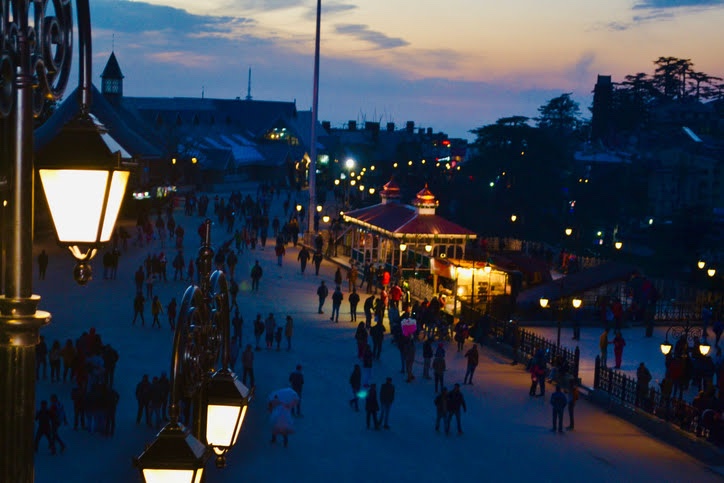
13. Mall Road, Shimla – A Busy Area For Locals And Tourists Alike

In the heart of Shimla is Mall Road, a street lined with a variety of restaurants, clubs, banks, shops, post offices and tourist offices. Mall Road is one of the busiest areas in Shimla, famous for its exciting attractions that include multiple stores you can shop from. This stretch celebrates the spirit of Shimla and can be enjoyed by groups of friends, families and honeymooners alike. Most of the stores on Mall Road are famous for their woollen clothes and exclusively handcrafted works, aside from the usual books and jewellery. Tourist spots like Scandal Point and Kali Bari Temple are also accessible from Mall Road. 

14. Commercial Street, Bangalore – Budget-Friendly Options

A trip to Bangalore without visiting Commercial Street. Shopping in Bangalore is synonymous with this bustling street that is located between Kamraj Road and Shivaji Nagar. The narrow by-lanes of Commercial Street is the perfect place to spend hours looking at everything the stores have to offer. Shops selling clothes, accessories, footwear and so much more awaits you at Commercial Street that is frequented by hundreds of people every day. Budget-friendly fashion is available in plenty at Commerical street. 

The Traditional Markets In India Offer More Than Just Things To Buy

All of the lively, colourful markets of India are a marker of our rich cultural heritage. Aside from the gorgeous things on sale, they are also the perfect place to explore how our culture has evolved over the years while retaining its charm and allure. Each market has its own story to tell making them must-visit destinations when you’re visiting any city in India.

Homemaker Upcycles Junk Bikes, Bulbs, Basins to Create Fairytale Garden in UP

Till 2013, Ghaziabad resident Ruchi Goel had never tried her hands at growing even a single plant, even though her mother nurtured a charming garden in their home when she was growing up. null

“Even my mother-in-law had a beautiful garden, but after her death in 2013, the plants started dying, despite the fact that I was watering them everyday,” she tells The Better India.

Ruchi realised that the plants needed individual care, so she decided to take up gardening in her mother-in-law’s memory.

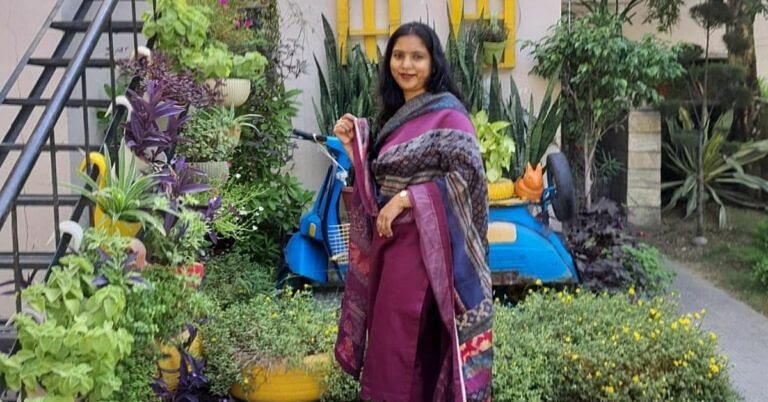
The 'upcycled' garden of ruchi in ghaziabad

Ruchi’s upcycled household items.

“I began watching videos and taking tips from my mom to sustain the garden. But it worked beyond my expectation and made me fall in love with the activity. I started buying more plants and thought of different ways to grow them in the front yard. In fact, I am addicted to this hobby now,” shares the homemaker.

Ruchi now grows more than 1,000 ornamental and flowering plants in her lush garden. She also cultivates vegetables like radish, brinjal, tomato, coriander and carrot on the terrace.

The creative garden full of colours by ruchi in ghaziabad

A creative garden full of colours.

Everyone who swings by the place is mesmerised, she says, not only because of the wide collection of plants, but also for the gardener’s creativity. Ruchi has incorporated her art skills by using several items from her household, which would otherwise be junk, to beautify her garden.

“I opened our store room — which had been left locked for years — during the lockdown period. I found multiple things that would be of no use otherwise and decided to upcycle them,” says the 33-year-old.

These items include her husband’s old scooter, her children’s abandoned bicycles, toys, bulbs, a wash basin, and wood particles left from construction.

She paints all the items herself.

ruchi goel engaged in decorating her garden in ghaziabad

Artist at work.

“Now people come here to enquire where I purchase these decorative items from. Some find it hard to believe that I made them from scrap, including my family,” she gushes.

Today, Ruchi’s garden is not an ordinary one, but a thematic setup. To remember the names of plants, she has placed stones painted with the name of each herb and flower. “My kids also love gardening now, just like art. They help me do both with so much energy,” she adds.

These items include her husband’s old scooter, her children’s abandoned bicycles, toys, bulbs, a wash basin, and wood particles left from construction.

She paints all the items herself.

ruchi goel engaged in decorating her garden in ghaziabad

Artist at work.

“Now people come here to enquire where I purchase these decorative items from. Some find it hard to believe that I made them from scrap, including my family,” she gushes.

Today, Ruchi’s garden is not an ordinary one, but a thematic setup. To remember the names of plants, she has placed stones painted with the name of each herb and flower. “My kids also love gardening now, just like art. They help me do both with so much energy,” she adds.

From a girl who never watered her mother’s garden to a ‘plant mommy’ with more than 1,000 plants, the change is so huge that even I am surprised. It’s all because gardening has the power to leave you happy, satisfied and calm. Nothing comes close to the feeling of saving a dying plant or seeing a fresh bud in a newly purchased plant,” she says.

Published by Theaglenews

Go On Waterfall Trails And Forest Walks In Tamelong And Senapati

This winter, look at going slow in Manipur. Hit up Tamelong and Senapati districts which have beautiful emerald-green hills and meandering rivers flowing lazily, sometimes breaking into waterfalls and sometimes into gentle streams.

For your winter holidays, get away from the hustle and bustle, and head out to these two places in Manipur for sensitive and sustainable travel. With their mesmerising landscape, they are perfect for mindful exploration. Here’s a guide to what to explore in the region.

The Tamenglong district is home to deep gorges, mysterious caves, waterfalls, orchids, and uncharted woodlands. Due to its extensive orange production, it is also known as Manipur’s orange bowl. Tamenglong, 140 kilometres to the west of Imphal, serves as the district headquarters. The Hoabinhian civilisation, which is also present in other South Asian nations, is said to have originated in the Tharon cavehere. There are five outlets in the 655.6m-long cave. The layout of the entire cave is depicted on a stone at the entrance for the convenience of visitors.

You can also hit up the Zeilad Wildlife Sanctuary which is situated in Makoi and is home to a variety of animals, including tigers, leopards, little Indian civets, langurs, hoolock gibbons, and great Indian hornbills. Residents of this picturesque lake include turtles and pythons. Between March and April, migratory birds can also be seen in this area. On the western side of Tamei town is the lovely Buning Meadow. The meadow sometimes resembles an orchid bed during specific periods of the year. The district also hosts the Barak river which breaks into seven waterfalls, within close proximity of each other. Owing to its rapid tides, the Barak river is perfect for white-water rafting and other watersports. One of the seven, Khoudong waterfall is relatively unexplored.

Senapati

Most of the region is covered with dense forests with a diverse range of flora and fauna, including very rare species. Sacred to the tribes of Manipur and Nagaland, Makhel Caves are worth a visit. According to legend, this site marks the spot from where the Nagas dispersed to other regions in the Northeast. An old pear tree here stands as a memorial to the event. Other attractions include sacred banyan trees, believed to have grown from the tomb of the Naga mother; the Dispersal Tree at Sajouba (2km north of Makhel); the Farewell Monolith, the Triomonolith (3km south of Makhel), the Hailstorm of Stone, and the Lucky Stone.

Nothing quite prepares you for your first glimpse of the Sadu Chiru Waterfall. Flanked by steep, vegetation-covered cliffs, this delicate-looking cascade is worth the hike up to see it. It is 81km south of Senapati city. Visitors can reach this spot by hiring a car from Imphal, which is 25km away. Cars can go no further than Nambol from where autorick-shaws are available for hire. Even these can go only to a certain point after which one must approach on foot. The walk up to the falls involves climbing steep steps, so wear comfor-table shoes. Do not miss the charming little hamlets and scenic vistas on this leg of the journey.

Situated on a cliff in the westernmost tip of the Senapati District, the village of Yang Khullen is home to the Zemei tribe. The village (khullen) is 76km north of Senapati city. To the east of Yang Khullen lie Maram Khullen and Liyai Khullen. The former is one of the largest villages in the district. Liyai Khullen has stone monoliths, water pools and Banyan trees. The Barak river originates here.

A beautiful hill station lying on the Manipur-Nagaland border, Mao is just 44km northeast of Senapati. It is home to the Mao people, one of the major tribes constituting the Nagas. The small township is set along NH39 and is referred to as Mao Gate, owing to its location on the state border. The people of this village have a fascinating tradition of setting up monoliths or flat boulders, which serve as monuments to commem-morate an event or ritual.

Treehouses to Mud Bungalows: 2 Friends Make Forest Hideaways For Perfect Nature Trips

On the outskirts of the dense forest of Bandhavgarh National Park in Madhya Pradesh, rich with royal Bengal tigers, white tigers, leopards and deer, one can spot five houses on and among the trees. Here one can see wild animals and birds in the reserved forest.

These tree and mud houses are the brainchild of two friends from Uttarakhand.

Manav Khanduja and Shyamendra Singhare, who studied in the field of environment and hospitality, respectively, always dreamt of starting a business that was steeped in nature without causing it any harm. “It all started with our love for jungles and wildlife,” says Manav, co-founder and director of Pugdundee Safaris based in Haryana.

‘Pugdundee’ is a Hindi word meaning – ‘a foot trail commonly used by humans and animals’.

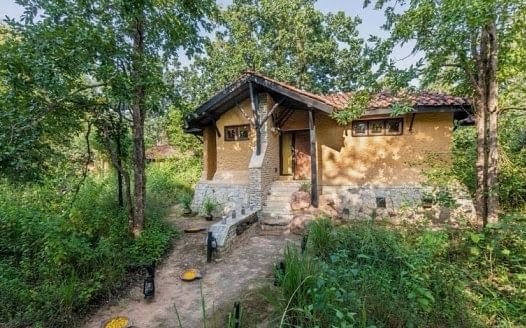
Mud house by Pugdundee.

This word is commonly used for beaten paths in the Indian jungles. Pugdundee Safaris, which had a humble beginning in 1986, is now a responsible safari company with seven properties across central India.

The beginning of Pugdundee was rather unplanned, says the duo. It started as a small tented camp at Panna as Ken River Lodge. “This was started as a part-time business. But once we realised the interest from travellers towards nature and wildlife tourism, we understood the scope and decided to expand,” says Manav, adding, “The growth was slow as we used the income from one property to build the next. After the first venture in 1986, we set up two more lodges between 2007-2010.”

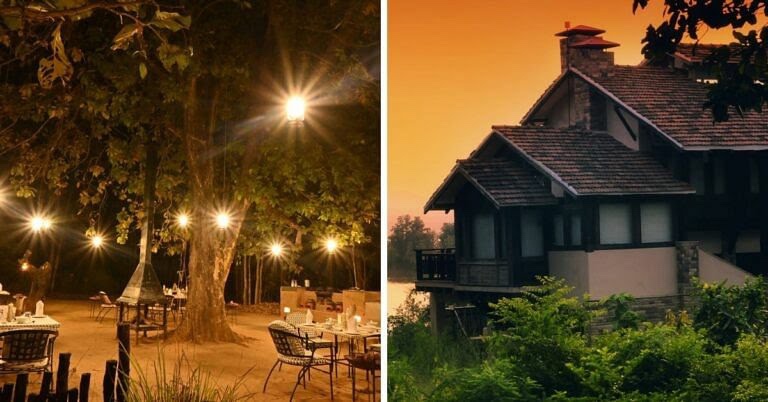
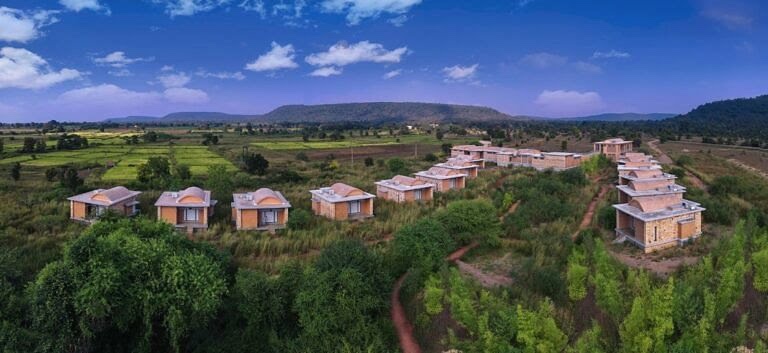
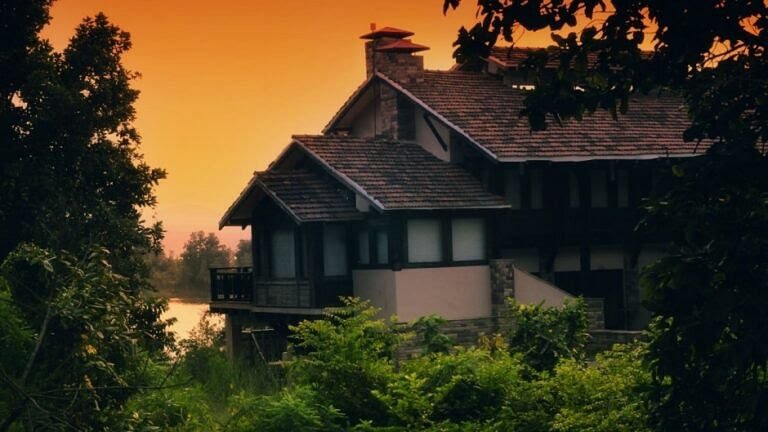
Today, Pugdundee Safaris have expanded to include the following properties in Madhya Pradesh: Kanha Earth Lodge in Kanha National Park, Denwa Backwater Escape in Satpura National Park, Pench Tree Lodge in Pench National Park, Treehouse Hideaway and Kings Lodge in Bandhavgarh National Park and Ken River Lodge in Panna National Park.

Pugdundee Safaris has seven properties across Central India.

They also have Waghoba Eco Lodge in Tadoba National Park, Maharashtra.

Shyamendra adds, “Central India is blessed with the country’s finest wildlife. It’s on the wish list of every wildlife enthusiast. The parks here are so diverse that one can feel completely overwhelmed by the mere expanse of the wilderness. The state also inhabits India’s most popular national parks, known for tiger sightings including Kanha and Bandhavgarh.” 

Pugdundee Safaris’ intimate jungle lodges, located inside popular national parks, let travellers closely experience the wilderness of the country. Manav, who graduated from the Centre for Environment Law at WWF, adds, “Since all the properties are situated in the suburbs of national parks, permission from the officials was a must. As the projects are completely sustainable, there were not many challenges in acquiring them.”

In Pugdundee we assure incomparable wildlife safaris,” he says, adding, “Between 2009 and 2022, we have been awarded for our excellence in safaris, our commitment to sustainability and our experienced naturalists.”

Pugdundee Safaris’ intimate jungle lodges, located inside popular national parks, let travellers closely experience the wilderness of the country.

What started with just two friends is now run by a passionate team of 300 professionals, 80 per cent of whom are locals, committed to providing an incredible wildlife experience. Manav says, “The team includes naturalists, nature guides, boatmen, trackers and a marketing team based in Delhi.”

Escape to the wild

Right from the beginning, the founders’ idea was not just to start a hospitality business. While some of the lodges provide a raw, into-the-nature experience, a few have luxury set-ups with a private pool, multi-cuisine food and a comfortable stay.

But most of our guests are inclined towards simple setups,” he says. For example, a popular choice, Kanha Earth Lodge is tucked away in a small tribal hamlet. It is built in less than 10 per cent of the 16 acres of natural forest that houses it. “The lodge and its furniture are constructed and designed using local material, waste and recycled wood, a true reflection of impeccable standards in green architecture. Mud is the main raw material of this ‘earth’ house. And all the walls are made of mud and wood.”

The wood finished interiors made using recycled materials in pugdundee safaris

Wood finished interiors made using recycled materials.

Sustainably building treehouses and lodges and employing local people were the other aims of the venture. Most of the staff at Pugdundee are from nearby villages and have an innate love for the jungles and professional dedication beyond the call of duty. “Over 45 of them who came in as beginners in the field of hospitality are now working in managerial roles,” he adds.

Manav says, “We believe that local people hold the future of the forests in their hands and can either help protect or destroy them. If we wish to conserve our forests, we must look after the needs of local people by helping to improve their ability to earn livelihoods, which in turn will enhance their standards of living. Addressing their needs is the key to ensuring the future of our natural habitats. We continuously strive to deliver the best possible guest experience, while still integrating the conservation of jungles and the people living around them.”https://210c045e97eb801d8f6667535844991b.safeframe.googlesyndication.com/safeframe/1-0-38/html/container.html?n=0

The duo agree that ‘responsible tourism and wildlife conservation go hand-in-hand’. So the lodges have a strict’ zero single-use plastic’ policy. The spaces are presented in vernacular architecture styles, tastefully built with an emphasis on local and green architecture. 

“For over five years, we continue to be actively engaged in contributing to the education and infrastructure of the local schools,” Manav says. “Adopting farm-to-table initiatives by serving fresh food grown in our organic kitchen gardens and sourced from local farmers is another measure. Above 70 per cent of lodge services and procurement needs are met locally.”

organic vegetables collected from local farmers is used to make meals in pugdundee lodges

From farm to plate.

The lodges are ‘rewilded’ with native species extending into natural forests, offering safe passage to visiting wildlife and a natural habitat to many other species. The food needed for the lodges is procured from within 100 miles of each location. “This not only helps our brand become carbon positive but also benefits the local farmers and economy,” says Manav, adding, “We have carefully curated our organic gardens to give our guests the taste of local flavour served with the uncompromised benefit of nutrition across our lodges.”

Additionally, they have adopted ESG (environmental, social, and governance), the international sustainability criteria for hotels, provided by the Global Sustainable Tourism Council in 2020 which is reviewed every year.

Call of the wild

“Being a wildlife resort, sitting in the hub of wildlife, the key experience that our guests expect when they visit us is a jungle safari. But we also host several other activities that can give them a real taste of local life and promote non-vehicular greener options of basking in the blissful serenity. This includes village visits, local food tasting, nature walks, cycling, sundowner treks and much more,” gushes Shyamendra.

jeep safaris to the forest are provided in the lodges of pugdundee

To the wild.

The lodges are fully operational between October to June as this is the time when the core area of the parks is open for visitors. The founders suggest that summers are usually considered to be a good time for sighting as the vegetation across these forests dries down, offering a clearer view. Winters, on the other hand, have their perks and the beauty of the forests is unmatched. null

Manav says, “All our lodges are boutique accommodations and allow only a limited number of intake at any point in time.”

Happy guests with the staff of pugdundee after a safari

Happy guests with the staff after a safari.

The team can be reached out through emails or direct calls. “We are active across social media, so customers reaching out to us through any of the platforms that we are present on, is also an easy option to make the bookings,” notes Manav.

The team has received several awards and recognitions including a silver medal in International Centre for Responsible Tourism (ICRT) Awards 2022 for reducing plastic waste in the environment category, another silver medal in the sustainable leadership hotels category of Outlook Indian Responsible Tourism Awards 2022, and India’s leading wildlife resort award by South Asian Travel Awards 2017.null

The price range for each lodge, depending upon the activities and number of days starts from Rs 10,000. For bookings and more, visit their website here.