EST A part of the high-rise 8 Boulevard Walk shows fire damage in Dubai, United Arab Emirates, Monday, Nov. 7, 2022. A fire broke out early Monday morning at the 35-story high-rise building in Dubai near the Burj Khalifa, the world’s tallest building. (AP Photo/Kamran Jebreili) Comment
Gift
Share DUBAI, United Arab Emirates — A fire broke out early Monday morning at a 35-story high-rise building in Dubai near the Burj Khalifa, the world’s tallest building. It wasn’t immediately clear if there were any injuries in the blaze at the apartment building, which had been extinguished by the time an Associated Press journalist reached the site.
Are you on Telegram? Subscribe to our channel for the latest updates on Russia’s war in Ukraine. Black char marks from the blaze could be seen stretching up the building that’s part of a series of towers called 8 Boulevard Walk by Emaar, the state-backed developer in the emirate. Dubai police and civil defense did not immediately acknowledge the blaze. Emaar did not immediately respond to a request for comment, nor did the city-state’s Dubai Media Office. A series of fires in tall buildings in skyscraper-studded Dubai in recent years has revived questions about the safety of cladding and other materials used in the country. On New Year’s Eve in 2015, a blaze raced through the Address Downtown, one of the most upscale hotels and residences in Dubai near the Burj Khalifa.
DUBAI, United Arab Emirates — A fire broke out early Monday morning at a 35-story high-rise building in Dubai near the Burj Khalifa, the world’s tallest building.
It wasn’t immediately clear if there were any injuries in the blaze at the apartment building, which had been extinguished by the time an Associated Press journalist reached the site.
Black char marks from the blaze could be seen stretching up the building that’s part of a series of towers called 8 Boulevard Walk by Emaar, the state-backed developer in the emirate.
Dubai police and civil defense did not immediately acknowledge the blaze. Emaar did not immediately respond to a request for comment, nor did the city-state’s Dubai Media Office.
A series of fires in tall buildings in skyscraper-studded Dubai in recent years has revived questions about the safety of cladding and other materials used in the country.
Need well-rounded professionals’ — why IITs, IIMs & IIITs are giving humanities a new thrust
New Delhi: It’s no longer enough to churn out graduates who know their engineering equations, software programmes, or management theories, but to produce ‘well-rounded professionals’ with a deep understanding of society, economics, polity, history, and more — so seems to be the growing consensus among top technical and professional institutes across India.
Over the last few years, the Indian Institutes of Technology (IITs), Indian Institutes of Information Technology (IIITs), and the Indian Institutes of Management (IIMs) have picked up humanities and the liberal arts in a big way, whether by offering new degree programmes, expanding the range of elective courses on offer, or starting transdisciplinary initiatives.
For instance, this month IIT-Jodhpur inaugurated its Centre of Excellence on Arts and Digital Immersion, which will reportedly “explore the intersection of art and digital technology”. Earlier this year, IIT-Guwahati launched a Master’s programme in liberal arts. IIT-Madras will offer a Master’s degree in economics, English, and development studies from 2023. IIM-Bangalore, too, plans to offer a four-year undergraduate program in liberal arts from next year.
Demand from students for a multi-disciplinary education and from the industry to have more “well-informed” professionals has fuelled the trend, experts who spoke to ThePrint said.
What has also provided an impetus is the National Education Policy (NEP) 2020, which calls for technical training to be interwoven with “opportunities to engage deeply with other disciplines”, with the aim of eventually “enhancing the employability of the youth”.
While IITs have been offering courses in humanities like economics, philosophy and English since their inception, and are now ramping up their offerings, the IIITs and IIMs are fairly new on the block. Across the board, these institutes are focusing on hiring professors with degrees from high-ranking international and Indian universities.
“The IITs always had humanities — they have had some of the best philosophy and sociology departments. But now IIITs and some other institutes are also including social sciences and humanities in their curriculum in a major way,” said Nishad Patnaik, who did his PhD from the New School for Social Research in New York and currently teaches philosophy at the Indraprastha Institute of Information Technology (IIIT) in Delhi.
Islamabad, Pakistan(CNN)Pakistan’s ex-Prime Minister Imran Khan was shot in the foot at a rally Thursday, according to an official from his party, which said the incident was an assassination attempt.
A bullet hit Khan in his foot after a gunman opened fire, Pakistan Tehreek-e-Insaf (PTI) senior leader Asad Umar said.
Khan is in a stable condition and undergoing surgery, according to Senator Fawad Chaudhry, a senior PTI politician and Khan’s former information minister.
Six others were injured and are still being treated, Chaudhry said.
The former Prime Minister is pictured after the incident.
Police said they detained a man suspected of firing shots at the rally. The male suspect was arrested with a 9mm pistol and two empty magazines, police said.
At least one person was killed in the incident, according to Faisal Javed, a senior PTI politician and close Khan ally who received a wound to the head in the attack. The victim’s name has not been released.
In a video statement Javed, who can be seen sitting up while receiving treatment, said: “Please pray for us, for Imran Khan, pray for our fellow workers who are severely injured and pray for our party member who has died and is martyred.”
Protests broke out across Pakistan in support of Khan, including in the capital Islamabad as well as in Peshawar. Khan was on the seventh day of a nationwide rally tour calling for elections to be brought forward from August next year.
A grab taken from video of the incident
Prime Minister Shehbaz Sharif, who came to power after Khan lost a parliamentary vote of no confidence in April, condemned Thursday’s attack on his political rival on Twitter.
“I condemn the incident of firing on PTI Chairman Imran Khan in the strongest words,” Sharif wrote, adding that he has asked for an “immediate report on the incident” and will pray for the recovery of those injured.
“Violence should have no place in our country’s politics,” Sharif wrote.
On October 21, the Election Commission of Pakistan (ECP) recommended that Khan be disqualified from holding political office for five years, a move likely to further inflame political tensions in the country.
While reading out the recommendation, ECP chief Sikandar Sultan Raja stated that Khan was disqualified for being involved in “corrupt practices.”
The commission said its decision was based on the grounds that Khan had “made false statements” regarding the declaration of the sale of gifts sent to him by the leaders of Saudi Arabia and Dubai while in office — an offense that is illegal under the country’s constitution.null
Khan was unseated in a vote of no-confidence following claims of bad governance and economic mismanagement.
Since then he has repeatedly claimed, without providing any evidence, that the United States had orchestrated his ouster. Khan’s allegations have become a staple at rallies he has held across Pakistan in a bid to return to power.
His claims have struck a chord with a young population in a country where anti-American sentiment runs high, and anti-establishment feelings are being fueled by a rising cost of living crisis.
This is not the first time that Pakistani politicians have been attacked.
Former Prime Minister Benazir Bhutto was assassinated on December 27, 2007, and then Prime Minister Yousaf Raza Gillani survived an assassination attempt in 2008.
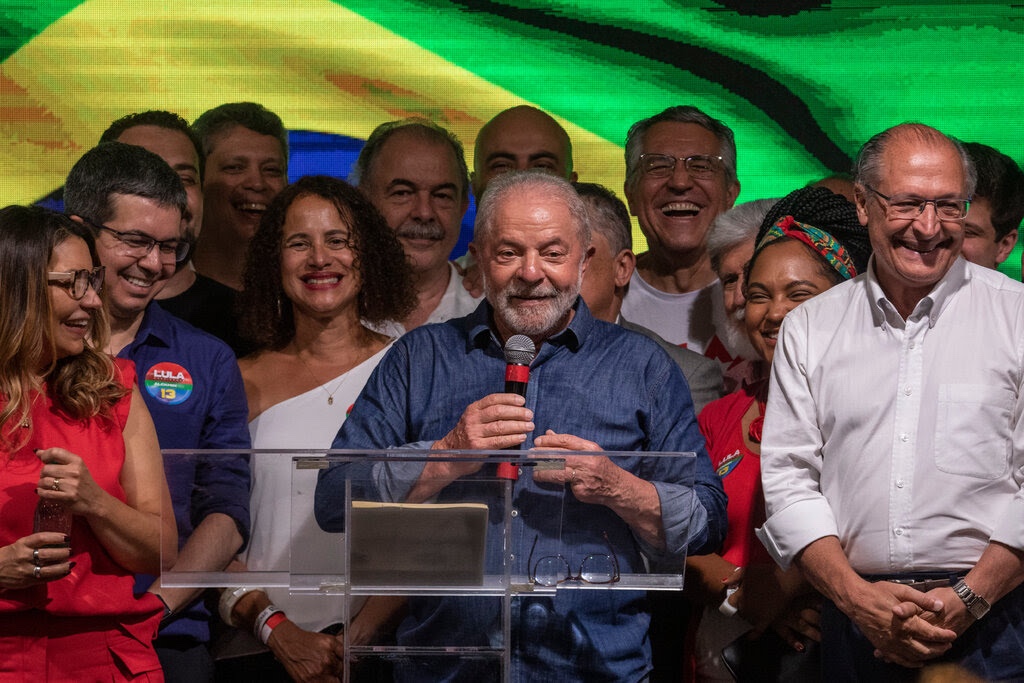
Luiz Inácio Lula da Silva will be the country’s next president, officials confirmed, after a long and bitter campaign between the former president and the current far-right leader. It was a rejection of Jair Bolsonaro’s far-right movement and his divisive four years in office.
Luiz Inácio Lula da Silva celebrates winning the presidential election on Sunday night in São Paulo, Brazil.
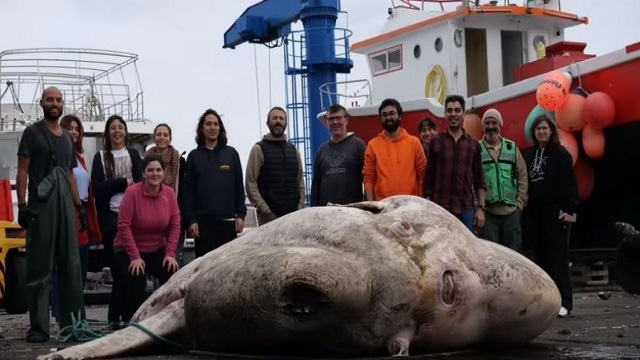
A monster sunfish, tipping the scales at nearly 3 tonnes was found floating dead off the shore of Portugal in the Atlantic. It has been discovered to be the world’s heaviest bony fish ever seen. Although the oceanic behemoth was discovered on the 9th of December last year, near Faial Island, in the Azores details of the discovery were recently published in the Journal of Fish Biology which brought it into the limelight.
The local authorities took the mortal remains of the aquatic animal back to the port in order to conduct a proper study on it. Researchers from Atlantic Naturalist Association and the Azores University studied the carcass and collected more data on it. When discovered, the humongous fish was weighed, measured, and the tissue sample was taken for DNA testing.Ads by
Reportedly, the carcass of the fish weighed about 6,050 pounds. This makes it several pounds heavier than the previous world record holder for heaviest bony fish which was a female sunfish caught off Kamogawa in Japan in the year 1996. This also puts it in the same weight class as a Hummer or a rhinoceros!
The Azores sunfish was weighed with a crane scale dynamometer after being raised above ground using a forklift truck. The dynamometer is a device designed to weigh loads typically hoisted by a crane. The fish was 10.67 feet long and had a height of 11.78 feet.
Although the reason for the death of the marine behemoth is unclear, it is speculated that it could have been inflicted by the keel of a boat. The conclusion was made after a close observation of the wound suffered by the fish which marked the cylindrical dent on its head with red paint.
José Nuno Gomes-Pereira, the lead author of the paper and postdoctoral researcher from the Atlantic Naturalist Association, told CNN Tuesday that it was saddening “to see the animal in this situation as it must have been a king of open ocean.”
The “tremendously big” sunfish has been buried in the Natural Park of Faial Island, he added.
There are two types of fish, cartilaginous and bony. Bony fish account for the majority of fish, according to Gomes-Pereira — think carp, salmon, and bass. Cartilaginous fish have skeletons made of cartilage and encompass species like sharks and stingrays.
Giant sunfish were first recognized as their own species in 2018 and are known to weigh twice as much as the second heaviest fish species, the ocean sunfish, according to a news release from the Atlantic Naturalist Association last Thursday.
At first glance it may look like Twitter CEO Parag Agrawal has lost the fight with Elon Musk, who fired him immediately after buying Twitter. But look closer: Agrawal is actually the winner as he forced Musk to complete a $44 billion deal which Musk wanted to avoid.
Highlights
Twitter is now an Elon Musk company as he closes a $44 billion deal.
Immediately after taking control, Elon Musk fired Twitter CEO Parag Agarawal.
Agrawal, however, is a winner in the tussle as he forced Musk to complete the deal.
After months of drama, some testy statements, a bit of trolling from Musk and the reveal of some juicy text messages, Elon Musk is finally closing his deal to purchase Twitter for some $44 billion. Now as he completed the deal, according to reports, Musk has already gone after the senior leadership of Twitter. It is well-known after the months-long saga that there is no love lost between Elon Musk and Twitter CEO Parag Agrawal. Musk also doesn’t like other top leaders at Twitter, including the company’s policy chief Vijaya Gadde and its CFO Ned Segal. So, all three have been fired, probably along with a few more.
At first glance it looks like a “win” for Elon Musk, who has sparred — almost in public with Gadde and privately with Agrawal — with Twitter leadership since he launched his bid to get a stake in the company. But look closer and it is clear that it is not Musk but Agrawal who is the winner in this tussle. Sure, he is losing his job as the CEO of Twitter. But significantly, even as he loses something, he is gaining a lot because he has forced Elon Musk to go through a deal that is extremely lucrative for Twitter shareholders. Keep in mind that Agrawal has forced him to purchase Twitter even when Musk tried to walk away from the deal.
Personally too, Agrawal is getting something out of his firing. When he became the CEO of Twitter last year in December, he did so with a clause in his contract that guaranteed him a severance fee of $42 million if Twitter asked him to go before one year was over. This is the money that Twitter, now an Elon Musk company, will pay to Agrawal.
Musk forced to the deal table
To understand why this is a win for Agrawal, one needs to look at what has happened in the Musk-Twitter saga since April.
Once Elon Musk decided that he would not join the Twitter Board and instead acquire the company, it became clear that things were not cool with him and Agrawal. A few days later, when Musk launched his bid to purchase Twitter for $44 billion, a price that most felt was extremely generous and too good to pass, most people assumed that if Musk succeeded in getting Twitter then he would ask top executives to go. In other words, it was very clear that Agrawal would not have a place in the Twitter owned by Elon Musk. And it would have been very clear to Agrawal too.
Yet, Agrawal as CEO of Twitter probably recognised that the price Musk was offering was too good and he threw his weight behind completing the deal.
But once Twitter accepted Musk’s offer, things started to unravel fast. With many experts weighing that Musk was overpaying for Twitter, as well as highlighting how Musk would find running this company a difficult preposition, Musk probably had second thoughts. He started talking about the problem of bots on Twitter and alleged that the company withheld information from him. Twitter denied the allegations. Yet, after a few weeks, Elon Musk unilaterally decided to terminate the deal.
Parag Agrawal stays firm
This is probably when Agrawal decided to hit back. Twitter defied Elon Musk and refused to terminate the deal from its side. At the same time, with Agrawal as its CEO, the company said that it would force Musk to go through the deal. No compromise at all. When the mutual agreements failed to materialise, Twitter filed a case against Musk, asking court to enforce the deal.
In the end, it was the court and the spectre of a messy lawsuit that probably made Musk change his mind. Days after texts between Musk and others were filed in the court as Exhibit and then came out in public, Elon Musk changed his mind. He told the court that he would go through with the deal and that he was willing to pay the same $44 billion for the company, a price that most experts find extremely generous.
The fact that Twitter management has virtually forced Elon Musk to pay an exorbitant amount of money for the company is a win in every possible way for Agrawal.
And Parag Agrawal put every effort into enforcing the deal knowing well that as soon as Musk got the company he would be fired. But the CEO’s post was not the prize here. The prize was the lucrative deal. Musk, realising that he was overpaying, tried to get out of it. He trolled and threw shades at Twitter, and its management. But Twitter and Agrawal remained focussed and didn’t let him get out of the deal. This is the reason why they are the winners of this Musk-Twitter saga. Now after taking control of Twitter, Elon Musk is putting on a brave face. But reality is that he has been humbled in this corporate war.
Least but last India expects Twitter To comply with Local Laws after Musk Takeover.
Twenty months on, the junta has not been able to establish full control over the country. Many of Myanmar’s ethnic armed organisations (EAOs) have joined armed civilian groups called People’s Defence Force (PDF), which are allied to the self-declared National Unity Government (NUG) in exile.
The meet is being held ahead of the ASEAN and East Asia Summits in Cambodia from November 10 to 13, amid unprecedented differences among members of the grouping on how to deal with the regional crisis that has affected all of them in one way or another.
Much of the resistance by the civilian PDFs is in the Chin State and Sagaing Region, which share borders with Mizoram and Manipur. A fragile truce between some EAOs and the military dating back to 2018 has broken down. Many EAOs support the civilian rebellion, and the junta is fighting separate armed groups as well as the PDFs across the country.
On October 23, according to reports from Myanmar, over 60 people were killed in an airstrike by the Myanmar military in Kachin State, in an area famous for its jade mines some 400 km from Kohima as the crow flies.
The strike targeted an open air concert to celebrate the 62nd anniversary of the founding of the Kachin Independence Organisation, whose military wing, the Kachin Independence Army, has been fighting a protracted battle against Myanmar’s rulers. The military has said all casualties were combatants.
While the Myanmar army has routinely used air power against the EAOs, in the months since the coup, it has not hesitated to strike at civilians as well. Attack helicopters have been deployed against PDFs in the Sagaing and Magway Regions.
In Rakhine State, the military is fighting the Arakkan Army (AA), with the violence sometimes spilling over to Bangladesh. The AA, which is fighting for the independence of Rakhine, has kept its distance from the PDFs and the NUG. While the AA is anti-Rohingya, the NUG, comprising parliamentarians who were elected in 2020, has appeared to take a more progressive view on the Rohingya people, officially declaring that they are entitled to citizenship in Myanmar.
V On the political front, Aung San Suu Kyi, leader of the National League for Democracy who was jailed after the coup, has been convicted in multiple cases and sentenced to 20 years in prison.
Sahar Tabar said she always wanted to become famous and chose the macabre makeover to gain international attention.
An Iranian woman who became famous on Instagram for posting spooky photos resembling Hollywood actor Angelia Jolie has revealed her real face after her release from jail. Sahar Tabar was arrested in October 2019 on charges of “corruption” and “blasphemy” and sentenced to 10 years in prison. But she was released after 14 months after widespread protests in the country, triggered by the death of Mahsa Amini last month. Ms Tabar was widely believed to have undergone cosmetic surgery, which made her look like the spooky version of Angelina Jolie.
After her release, the 21-year-old finally showed her real self to cameras this week, according to a report in
Many people had launched campaigns on social media for her release. Among them is activist Masih Alinejad. When she was jailed, Ms Alinejad had tweeted: “Sahar Tabar is only 19. Her joke landed her in jail. Her mother cries every day to get her innocent daughter freed. Dear Angelina Jolie, we need your voice here. Help us.”
After being released from jail, Ms Tabar said she had undergone some cosmetic procedures, like a nose job, lip fillers and liposuction, but stressed that the infamous images were a result of make-up and editing on Photoshop. Due to her spooky photos, she was called “zombie Angelina Jolie” on social media.
What you saw on Instagram was the computer effects I used to create the image,” she told a state-run outlet, as reported by news.com.au.
Ms Tabar, whose real name is Fatemeh Khishvand, said she always wanted to become famous and chose the macabre makeover to gain international attention. The woman also said that cyberspace provided an easy way. “It was much easier than becoming an actor,” the outlet further quoted her as saying.
Ms Tabar also said that the images were created as a “joke” and expressed regret. “My mother was telling me to stop, but I didn’t listen.”
Alef bills its still-in-development electric vehicle, the Model A, as the first true flying car – a vehicle that it hopes will look like a sleek electric car but be capable of vertical take-off, and able to fly for 110km (68 miles).
The firm hopes to compete in a market occupied by well-advanced rivals, such as AirCar and the Pal-V gyrocopter that are already flying and driving.
But Jim Dukhovny, Alef’s chief executive and co-founder, argues most existing vehicles are not strictly flying cars in his opinion.
A flying car has to be a car, which means it can drive on a regular street, park in a regular parking space. And it also should have vertical take-off,” he told the BBC.
“If you require an airport to take-off, what problem are you solving? And why is this a flying car?”
Flip to fly
The top surface of the Model A’s car-like exterior is a mesh so that air can pass through to eight propellers inside the body which provide lift.
But flying any distance using these alone, without the assistance of wings, would require prohibitive amounts of power.
Alef’s proposed solution is novel – for longer flights the Model A transforms into a biplane.
After a vertical lift-off, the Model A will turn onto its side, the two-person cockpit swivels so the driver remains facing forward, and the car becomes a biplane with the long sides of the vehicle forming the top and bottom wings.
The classic biplane shape, with two wings, one on top of the other, is easier to see in the Model A if you imagine the mesh in-between the solid sides being removed. Alef has also produced a video visualising the transition.
Forbes observed that the way it would fly resembles the Opener Blackfly, an existing vertical take-off electric aircraft.
It’s an ingenious idea, but is it a practical one?
Bringing flying and driving together adds weight, electric power also means heavy batteries.
“The design is right on the ragged edge of what the physics and technology can do, which is where you would expect it to be,” says aeronautical engineer Professor Steve Wright of the University of the West of England.
The mesh, as visualised, might also cause significant aerodynamic drag, he adds.
Alef says it has managed the transition to biplane in “scaled flights” since 2018. And it has large prototypes capable of vertical flight – though they don’t yet resemble the polished appearance of the firm’s mock-ups and concepts.
But Prof Wright warns the jump from a prototype to a working product is easily underestimated.
Image caption, A prototype of the Model A
Technical hurdles are only one obstacle to building highways in the sky busy with flying cars.
The regulation and certification of flying cars is likely to be rigorous, time-consuming and expensive, as it is for any aircraft.
To fly a biplane, even one that you can drive on the roads, will require a pilots licence – though Mr Dukhovny envisions that for short low-level hops over obstacles using vertical flight, a licence used for drone operators might suffice.
And authorities are likely to impose strict rules on where vehicles can be flown.
‘Where we’re going, we don’t need roads’
For these and other reasons, Prof Wright thinks the future of flying cars will not be a single vehicle that consumers own, drive and fly.
In the film Back to the Future, the character Doc Brown’s fusion-powered DeLorean car leaves the road and swoops into the air.
“That isn’t how mass airborne transport is going to play out, which is a real shame. I really want my flying DeLorean as much as anybody does,” Prof Wright says.
In reality, travelling by flying car, Prof Wright argues, would be more like hiring a taxi.
“You pull out your phone, and a robot car would draw up and it would take you to somewhere the size of a small park and the drone comes down, sets itself down, you jump in there. So in other words, you summon a drone taxi.”
But Mr Dukhovny strongly believes that the idea of being able to drive and fly in the same vehicle is an attractive one. When I ask him who will pay the Model A’s initial $300,000 (£266,000) price tag, he says “early adopters”.
He says people have been waiting for a flying car for a 100 years. Alef’s ambitious goal is to start selling vehicles in 2025.
With his strategy to “weaken” Russia, the Joe Biden and Zelenesky may be turning the Ukraine war into a global one.
U.S. President Joe Biden and his NATO allies have escalated their policy of helping to defend Ukraine against Russian aggression into a policy of undermining the power and influence of Russia itself. In so doing, some observers fear, they are leaving Russian President Vladimir Putin little choice but to surrender or double down militarily, raising the possibility of widening his war beyond Ukraine.
The new U.S. and NATO strategy is partly based on Ukraine’s continuing battlefield success against Putin, who has been forced to scale down his ambitions from a full takeover of Ukraine to a major new assault in its eastern and southern parts. NATO allies including Germany, which until this week had equivocated on sending heavy offensive weaponry to Ukraine, have ratcheted up their aid in response. German Chancellor Olaf Scholz, under political pressure at home and abroad, announced earlier this week that his country would provide 50 anti-aircraft tanks to Ukraine.
Yet other Russia experts expressed worry that the United States and its Western allies are, in effect, crossing the very redlines they have avoided until now. For most of the two-month conflict, Biden has refused to authorize any military support, such as major offensive weapons or a no-fly zone, that might be perceived as putting U.S. or NATO forces in direct conflict with Russia. Now, some observers worry that with the additional aid and tougher economic sanctions, the U.S. president is forcing Putin into a corner in which he can only fight on or surrender. The latter course would mean relinquishing Putin’s career-long aim of strengthening Russia against the West. Yet Putin, who has long said the West’s goal was to weaken or contain Russia, has never been known to surrender during his decade and a half of aggressive moves against neighboring countries, mainly Ukraine and Georgia.
“In the Kremlin’s eyes the West is out to get Russia. It was unspoken before. Now it’s spoken,” said Sean Monaghan, an expert on Europe at the Center for Strategic and International Studies. “If you combine this with Biden’s comments, at his summit in Poland last month, that ‘this man [Putin] cannot remain in power,’ all that turns this a territorial war into a wider confrontation and might make negotiating a settlement to end the war in Ukraine far more difficult or even impossible at the present.” (Biden officials later said that the president was not seeking regime change in Russia.)
George Beebe, a former chief of Russia analysis for the CIA, said that the Biden administration may be in danger of forgetting that the “the most important national interest that the United States has is avoiding a nuclear conflict with Russia.” He added that “the Russians have the ability to make sure everyone else loses if they lose too. And that may be where we’re heading. It’s a dangerous corner to turn.”
A Qantas flight attendant has been filmedhaving a tense interaction with a passenger. The passenger claims the staff was being rude to his wife and children.
A passenger filmed a heated argument between a flight attendant and another passenger on a Qantas flight back in September. The video captured the man yelling at the stewardess. He stated the crew was behaving nasty toward his wife and children who were teething at the time. Then during their interaction, he mentioned the crew members had left his wife in tears.
Get out of my face.” An Australian family has been kicked off their Qantas flight home from Bali, after a tense altercation with flight attendants. Full details, tonight on
What happened
“They made her cry and she’s crying because they were being rude to her. With a newborn baby,” said the man arguing with the staff in the video.
The back and forth between the passenger and the stewardess begins to get worse as she’s seen holding her hand up to the man and asking him to “Stop”. The man just continues yelling over and over again demanding an apology. After the attendant see the man isn’t calming down they eventually ask him and his family to get off the plane.
Police called
“Unless you carry my kids out, force them out, we’re not leaving,” he says.
Then in one instance, he says: “Bring the police here,” to which the flight attendant responds: “We are.”
The man continues to argue with the attendant and the rest of the crew until they consider him to be uncontrollable.
“I told you, sir, you were swearing at my crew,” she says.
“You can’t upset my crew.”
He responds, “You’re getting angry at my wife because both of them (their kids) are double teething.”
He then says: “You can’t upset my family and kids. What are you talking about: ‘You can’t upset my crew,’ my wife is crying.”
“Tell security to come and take me by the balls,” he later adds.
Then finally he tells the flight attendant: “Get out of my face,” before the staff walks off for the second time.
As reported to News.com, a spokesperson for Qantas stated the family was removed from the airplane after “abusing our crew several times before the flight departing Bali”.
A statement from Qantas
“The safety of our customers and crew is our number one priority and we do not tolerate any kind of abusive behavior,” the spokesperson also said.
“We ask customers to follow the direction of the crew for the safety and comfort of everyone on board.”
In the comments, users were mixed in their response, with some siding with the airline, while others stated the man was defending his family.
A lot of users had mixed feelings on the matter. Many sided with the airline claiming he was being too aggressive with the crew members. Others sided with the man and his family since there were little babies involved. Clearly a simple apology might’ve deescalated the situation or the man could’ve kept a more level head and just made a formal complaint with the airline once they got to their destination.
Let us know how you would’ve handled this interaction as the passenger or as the stewardess.
Ukraine War: For months, the United States and other NATO members have sent billions of dollars worth of weapons and equipment into Ukraine to help it fight back against Russia.
Weapons shortages across Europe could force hard choices for Ukraine’s allies as they balance their support for Ukraine against the risk that Russia could target them next.
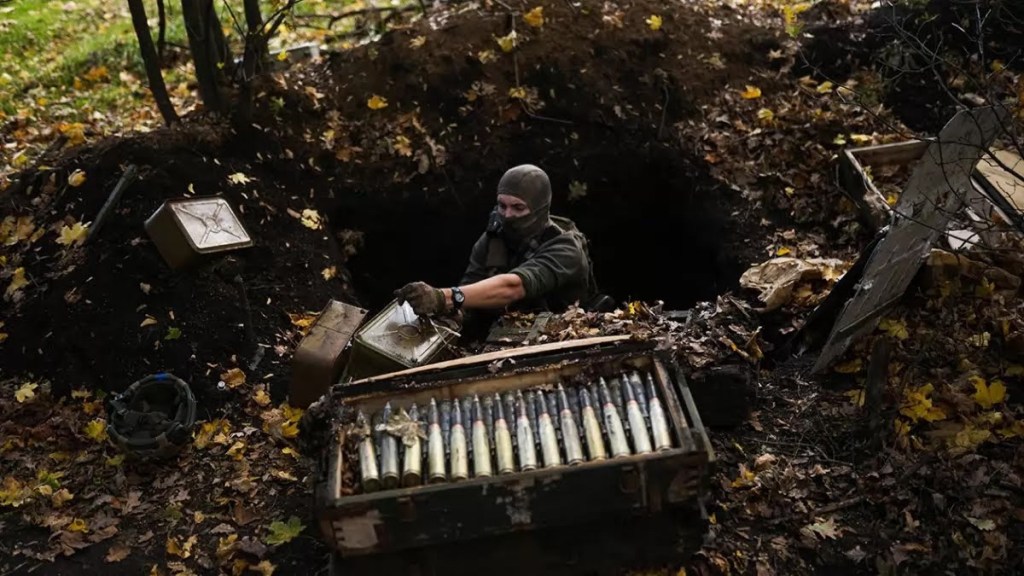
For months, the United States and other NATO members have sent billions of dollars worth of weapons and equipment into Ukraine to help it fight back against Russia.
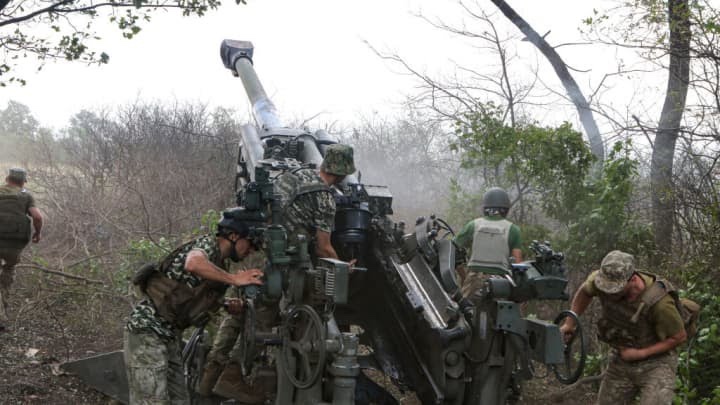
In the U.S. weapons industry, the normal production level for artillery rounds for the 155 millimeter howitzer — a long-range heavy artillery weapon currently used on the battlefields of Ukraine — is about 30,000 rounds per year in peacetime.
The Ukrainian soldiers fighting invading Russian forces go through that amount in roughly two weeks.
That’s according to Dave Des Roches, an associate professor and senior military fellow at the U.S. National Defense University. And he’s worried.
“I’m greatly concerned. Unless we have new production, which takes months to ramp up, we’re not going to have the ability to supply the Ukrainians,” Des Roches told CNBC.
Europe is running low, too. “The military stocks of most [European NATO] member states have been, I wouldn’t say exhausted, but depleted in a high proportion, because we have been providing a lot of capacity to the Ukrainians,” Josep Borrell, the EU’s high representative for foreign affairs and security policy, said earlier this month.
NATO Secretary-General Jens Stoltenberg held a special meeting of the alliance’s arms directors on Tuesday to discuss ways to refill member nations’ weapons stockpiles.
Military analysts point to a root issue: Western nations have been producing arms at much smaller volumes during peacetime, with governments opting to slim down very expensive manufacturing and only producing weapons as needed. Some of the weapons that are running low are no longer being produced, and highly skilled labor and experience are required for their production — things that have been in short supply across the U.S. manufacturing sector for years.
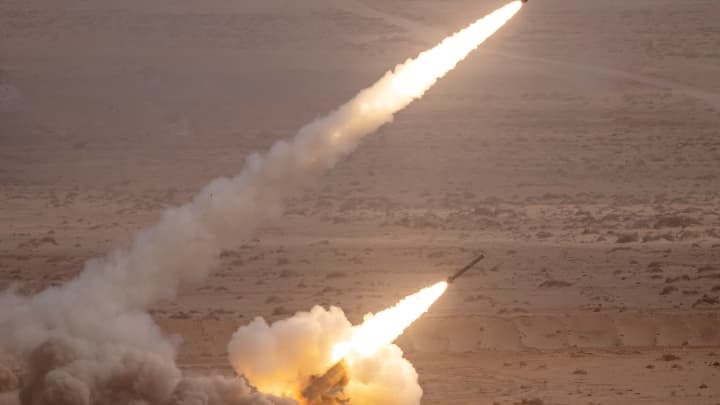
A US M142 High Mobility Artillery Rocket System (HIMARS) firing salvoes during a military exercise on June 30, 2022. The U.S. Department of Defense has announced that the U.S. will be sending Ukraine another $270 million in security assistance, a package which will include high mobility artillery rocket systems and a significant number of tactical drones.
Indeed, Stoltenberg said during last week’s U.N. General Assembly that NATO members need to reinvest in their industrial bases in the arms sector.
“We are now working with industry to increase production of weapons and ammunition,” Stoltenberg told The New York Times, adding that countries needed to encourage arms makers to expand their capacity longer term by putting in more weapons orders.
But ramping up defense production is no quick or easy feat.
The U.S. has been by far the largest supplier of military aid to Ukraine in its war with Russia, providing $15.2 billion in weapons packages to date since Moscow invaded its neighbor in late February. Several of the American-made weapons have been game changers for the Ukrainians; particularly the 155 mm howitzers and long-range heavy artillery like the Lockheed Martin-made HIMARS (High Mobility Artillery Rocket System). And the Biden administration has said it will support its ally Ukraine for “as long as it takes” to defeat Russia.
That means a whole lot more weapons.
The U.S. has essentially run out of the 155 mm howitzers to give to Ukraine; to send any more, it would have to dip into its own stocks reserved for U.S. military units that use them for training and readiness. But that’s a no-go for the Pentagon, military analysts say, meaning the supplies reserved for U.S. operations are highly unlikely to be affected.
There are a number of systems where I think the Department of Defense has reached the levels where it’s not willing to provide more of that particular system to Ukraine,” said Mark Cancian, a former U.S. Marine Corps colonel and a senior advisor at the Center for Strategic and International Studies.
That’s because “the United States needs to maintain stockpiles to support war plans,” Cancian said. “For some munitions, the driving war plan would be a conflict with China over Taiwan or in the South China Sea; for others, particularly ground systems, the driving war plan would be North Korea or Europe.”
What this means for Ukrainian forces is that some of their most crucial battlefield equipment – like the 155 mm howitzer – is having to be replaced with older and less optimum weaponry like the 105 mm howitzer, which has a smaller payload and a shorter range.
“And that’s a problem for the Ukrainians,” Des Roches says, because “range is critical in this war. This is an artillery war.”
A boy walks past a graffiti on a wall depicting a Ukrainian serviceman making a shot with a US-made Javelin portable anti-tank missile system, in Kyiv, on July 29, 2022.
The Javelin, produced by Raytheon and Lockheed Martin, has gained an iconic role in Ukraine — the shoulder-fired, precision-guided anti-tank missile has been indispensable in combating Russian tanks. But production in the U.S. is low at a rate of around 800 per year, and Washington has now sent some 8,500 to Ukraine, according to the CSIS — more than a decades’ worth of production.
Ukrainian soldiers take pictures of a mural titled ‘Saint Javelin’ dedicated to the U.S.-made portable surface-to-air missile has been unveiled on the side of a Kyiv apartment block on May 25, 2022 in Kyiv, Ukraine. The artwork by illustrator and artist Chris Shaw is in reference to the Javelin missile donated to Ukrainian troops to battle against the Russian invasion.
Christopher Furlong | Getty Images
President Joe Biden visited a Javelin plant in Alabama in May, saying he would “make sure the United States and our allies can replenish our own stocks of weapons to replace what we’ve sent to Ukraine.” But, he added, “this fight is not going to be cheap.”
The Pentagon has ordered hundreds of millions of dollars’ worth of new Javelins, but ramping up takes time — the numerous suppliers that provide the chemicals and computer chips for each missile can’t all be sufficiently sped up. And hiring, vetting and training people to build the technology also takes time. It could take between one and four years for the U.S. to boost overall weapons production significantly, Cancian said.
“We need to put our defense industrial base on a wartime footing,” Des Roches said. “And I don’t see any indication that we have.”
The U.S. Department of Defense disputed the suggestion that the U.S. is running low on its weapons stockpiles for Ukraine.
“The Department has provided a mix of capabilities to Ukraine – we, and they, are not over-reliant on any one system,” DOD spokesperson Jessica Maxwell told CNBC in an email. “We have been able to transfer equipment from U.S. stocks to Ukraine while managing risks to military readiness.”
The Pentagon is “working with industry to replenish depleted stocks on an accelerated basis,” Maxwell said. “This includes providing funding to buy more equipment, set up new production lines, and support additional worker shifts. We still have the necessary inventory for our needs.”
The DOD’s latest military assistance package, she added, “underscores the lasting nature of our commitment and represents a sustainable, multi-year investment in critical capabilities for Ukraine.”
A Lockheed Martin spokesman, when contacted for comment, referenced an April interview during which the company’s CEO, Jim Taiclet, told CNBC: “We’ve got to get our supply chain ramped up, we’ve got to have some capacity, which we’re already investing to do. And then the deliveries happen, say, six, 12, 18 months down the road.”
In the meantime, Ukraine can look elsewhere for suppliers — for instance South Korea, which has a formidable weapons sector and in August signed a sale to Poland for $5.7 billion worth of tanks and howitzers. Ukrainian forces will also have to work with replacementweapons that are often less optimal.
A Ukrainian serviceman mans a position in a trench on the front line near Avdiivka, Donetsk region on June 18, 2022 amid the Russian invasion of Ukraine.
Anatolii Stepanov | AFP | Getty Images
Jack Watling, an expert on land warfare at the Royal United Services Institute in London, believes there is still ample scope for Ukraine to supply itself with many of the weapons it needs.
“There is sufficient time to resolve that problem before it becomes critical in terms of stepping up manufacture,” Watling said, noting that Kyiv can source certain ammunition from countries that don’t immediately need theirs, or whose stocks are about to expire.
“So we can continue to supply Ukraine,” Watling said, “but there is a point where especially with certain critical natures, the Ukrainians will need to be cautious about their rate of expenditure and where they prioritize those munitions, because there isn’t an infinite supply.”
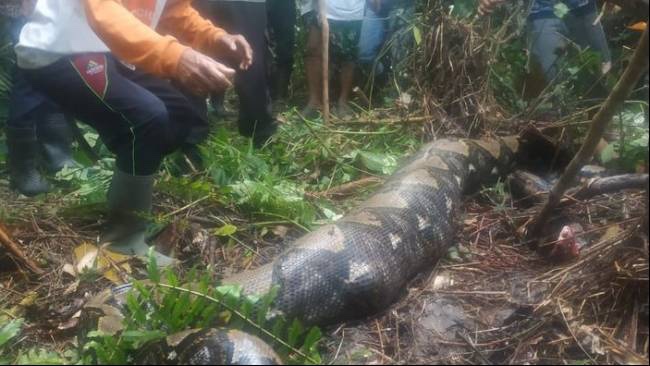
In a horrifying incident, a 22-foot-long python ate a 54-year-old woman in Indonesia. As per the police, a search started after the victim, identified as 54-year-old Jahrah, did not come home after collecting rubber from a plantation in the Jambi region. While speaking to CNN Indonesia, Betara Jambi Police Chief AKP Herafa said that the victim’s husband searched the entire area. He only found her sandals, headscarf, jacket, and knife. The next day, the husband, along with his search party, came across a giant snake with a swollen midsection.
It is being assumed that the python might have bit Jahrah, then wrapped itself around her before swallowing her. It would have taken at least two hours. Image of the python have been uploaded on Twitter. Have a look:
There are plenty of boardwalk hikes in Texas that feel like fairytales come to life, but none quite compare to the boardwalk that stretches across Lake Weatherford. A true hidden gem, this scenic journey lets you walk on top of the water for a magical adventure.
Boardwalk hikes are no ordinary trails. They allow you to walk on water and provide a unique opportunity to observe the flora and fauna that live on and below the surface.
One of the best boardwalk hikes in Texas is also one of our state’s most hidden gems. Located on Lake Weatherford, the longest floating boardwalk in the U.S. stretches over 4,300 feet long across the water.
Not only is the trail flat from end to end, making it among the most epic easy hikes in the state, but it’s also incredibly scenic.
Although the lake is prone to low water levels during periods of drought, the dense foliage in and around the water is always a sight to marvel at.
You’ll see everything from the tiniest lily pads to towering trees that have been around for ages. No matter how small, everything along the trail plays an integral role in the lake’s complex ecosystem.
The boardwalk meanders in all different directions as it leads from one side of the lake to the other, so you’ll get to take in the view from a variety of perspectives.
Be sure to stop along the way to revel in the peace and tranquility, with only the gentle sounds of nature interrupting the silence. There are also plenty of benches you can stop at to read a book or just enjoy some quiet time!
Since the trail is open from before dawn until well after dusk, you can rest assured that, no matter your schedule, you can carve out a bit of time for a stroll.
There is also a pavilion near the boardwalk that is available for rent on an hourly basis. Host your next birthday party or family gathering here for an experience the whole group will treasure!
Have you ever walked across Lake Weatherford on the longest floating boardwalk in the country? If so, we’d love to hear all about your experience in the comments! Don’t forget to check out our previous article for a nearby small town that’s been voted one of the best places to visit in America.
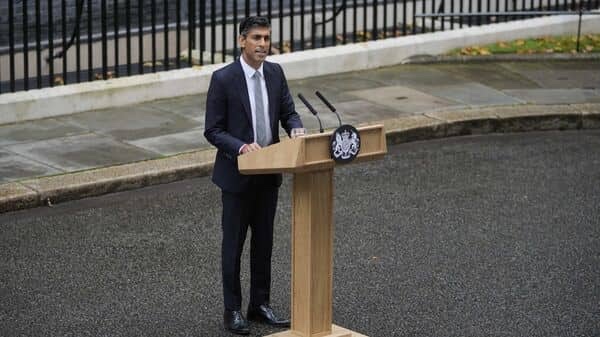
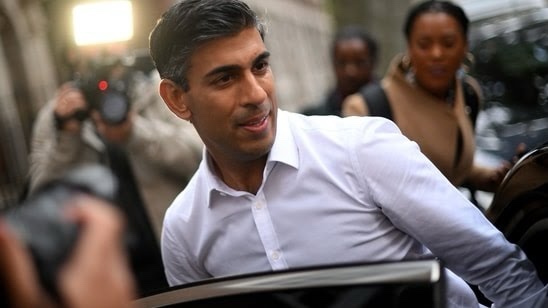
New British Prime Minister Rishi Sunak speaks at Downing Street in London, Tuesday, Oct. 25, 2022, after returning from Buckingham Palace where he was formally appointed to the post by Britain’s King Charles III. (AP Photo/Kin Cheung)
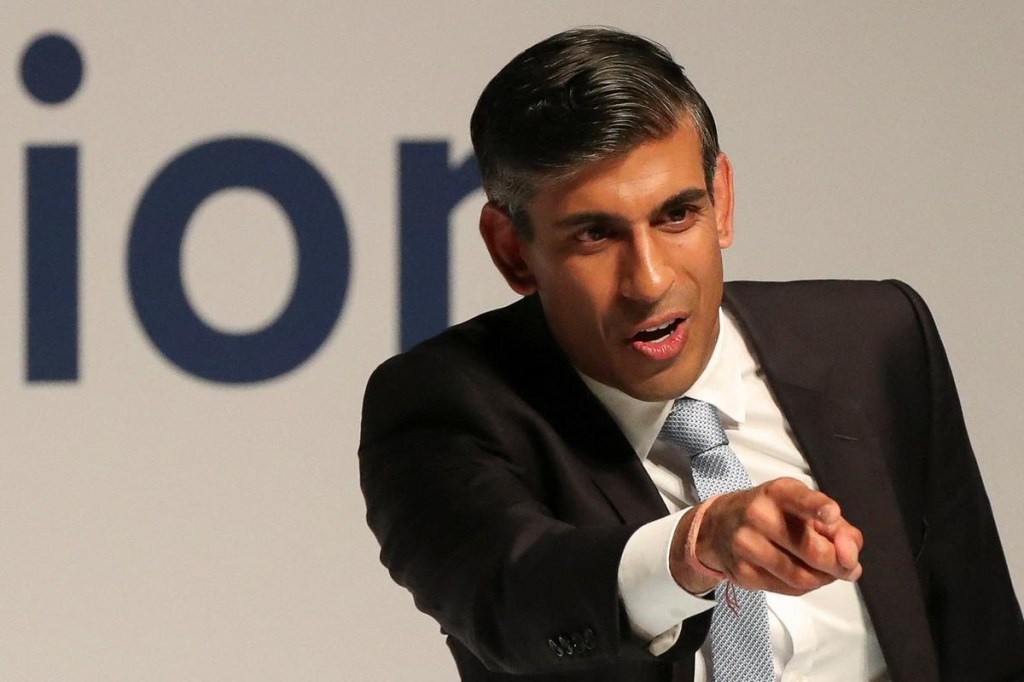
The 42-year-old investment banker-turned-politician Rishi Sunak on 25 October was sworn-in as UK’s first Indian-origin British Prime Minister.
Delivering his first speech for the first time as prime minister from lectern outside Downing Street, Sunak said that he is determined to “fix the mistakes” made by his predecessor Liz Truss.
Here’s what Sunak said:
1) Britain acing profound economic crisis: Sunak began his speech, he said, “Right now our country is facing a profound economic crisis,” adding, “The aftermath of Covid still lingers.”
2) Mistakes were need to be fixed: Referring to the mistakes made by his predecessor Liz Truss, PM Sunak said that he admired her restlessness to create change.
“Not born of ill will or bad intentions, quite the opposite. But mistakes nonetheless,” he said, adding that he is determined to “fix the mistakes” made by his predecessor.
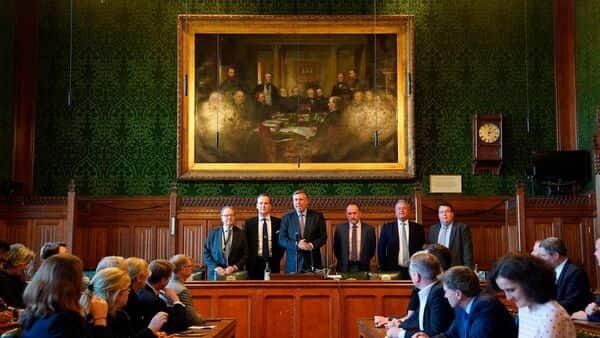
Sir Graham Brady, chairman of the 1922 Committee, announces that Rishi Sunak is to become the new leader of the Conservative party in the Houses of Parliament in London,
Outgoing Prime Minister Liz Truss, UK leadership candidate Penny Mordaunt, and Congress leader P Chidambaram were among the new Tory leader’s other well-wishers
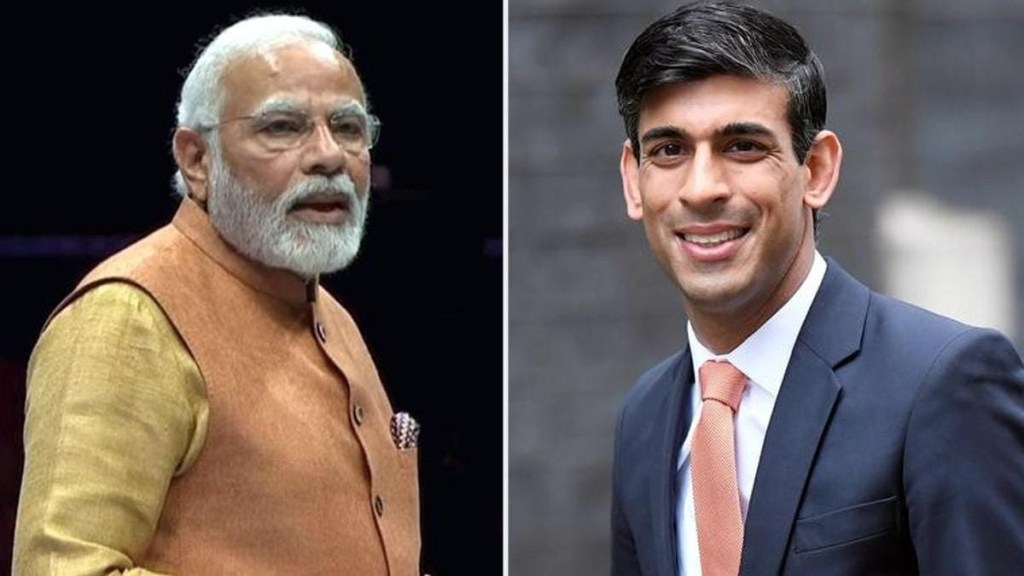
Prime Minister Narendra Modi on Monday congratulated UK’s next Prime Minister, the Indian-origin Rishi Sunak, in a tweet, saying, “I look forward to working closely together on global issues, and implementing Roadmap 2023.”
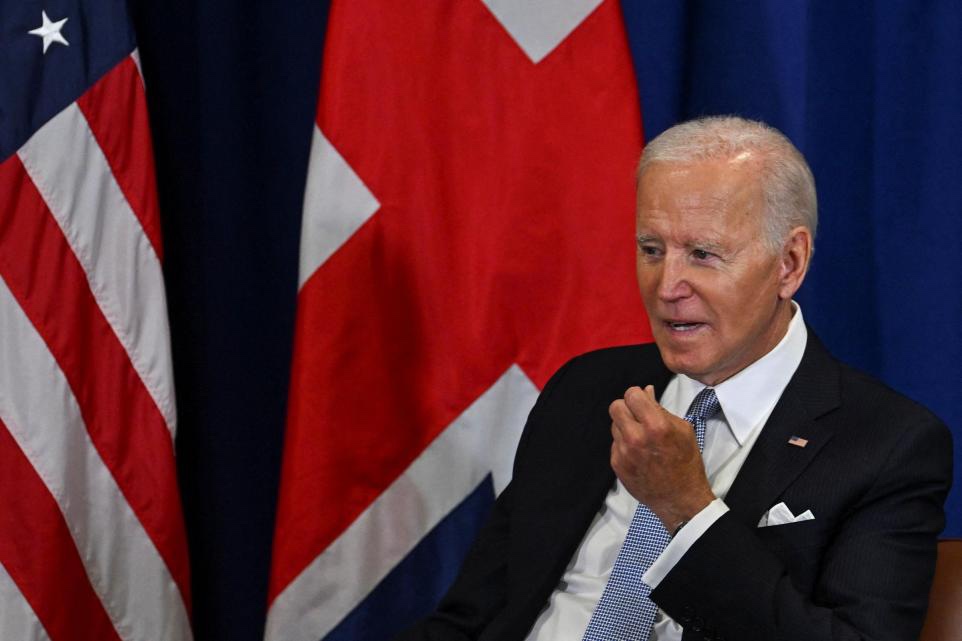
It is a “groundbreaking milestone” that Rishi Sunak will become the UK’s next prime minister, US President Joe Biden has said as he marked Diwali.
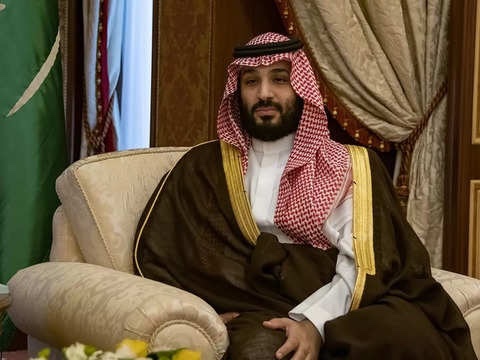
Saudi Crown Prince and Prime Minister of the Kingdom of Saudi Arabia (KSA) Mohammad bin Salman is expected to visit India in mid-November while on his way to the G20 summit in Indonesia’s Bali.
<p>Mohammed bin Salman<br></p>
External Affairs Minister S. Jaishankar, who visited Riyadh in September for bilateral talks, had conveyed Mr. Modi’s invitation to Mr. Salman, asking him to visit at an “early date”. Sources say the visit of the Saudi leader could cast doubt over Mr. Modi’s attendance at meetings with the 10-member Association of Southeast Asian Nations (ASEAN), and the 18-member East Asian Summit (EAS) leaders meeting in Cambodia around the same time.
During their meeting, PM Salman and PM Modi are expected to exchange views on the present energy security scenario due to the Russian war in Ukraine, and the western coalition sanctions that neither Indianor the Kingdom of Saudi Arabia has joined. The visit has geopolitical significance given U.S.-Saudi tensions over oil production cuts by the OPEC+ grouping that includes Russia, after which U.S. President Joseph Biden, who will also be in Bali, had warned of “consequences” for the Kingdom of Saudi Arabia.
Next UK Prime Minister LIVE Updates: Rishi Sunak- who was defeated by Liz Truss in the leadership contest- has the public endorsement of 145 Tory MPs
Next UK Prime Minister LIVE Updates: Britain’s former Chancellor of the Exchequer, Conservative MP, Rishi Sunak.
Rishi Sunak is set to be UK’s next prime minister as Penny Mordaunt- the only other candidate- is scrambling to persuade Tory MPs for support. Boris Johnson, who was expected to declare his bid for the prime minister post again withdrew from the race late last night.
Rishi Sunak– who was defeated by Liz Truss in the leadership contest- has the public endorsement of more than half of Tory MPs while Penny Mordaunt has just just 26 Tory MPs backing her till now – far below the 100 MP threshold which candidates need to hit by this afternoon if they wish to make it onto the ballot paper
Senior Tories visit Rishi Sunak’s campaign office, BBC reports
Several prominent Conservative MPs visited Rishi Sunak’s campaign headquarters, BBC reported. Kemi Badenoch, the International Trade Secretary, and Gavin Williamson, the former education secretary, both stopped off at Rishi Sunak’s office.























 ThEagle News