
Ganga–Jamuni Tehzeeb (Hindustanifor Ganges–Yamuna Culture), also spelled as Ganga-Jamni Tehzeeb or just Hindustani Tehzeeb, is the high culture that arose in the Yamuna-Gangetic plains of northern India, the Hindustan region,[1][2] a syncretic fusionof Hindu Yamuna-Gangetic society with the IslamicPersian culture.[3][4][5][6][7][8]With the rise of Persianate control over the subcontinent, the tehzeeb also spread, especially along the wider Indo-Gangetic Plains. Contemporarily, Ganga-Jamuni tehzeeb conveys either the syncretic Indo-Persian civilization or the specific Hindu-Muslim brotherhood.[9]
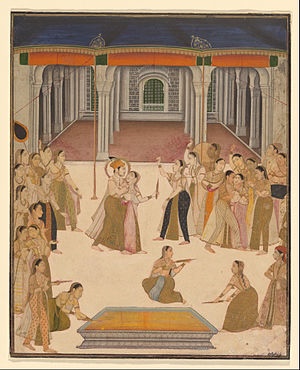
The culture arose following the Persianate control of the Gangetic plains, especially along the tributary Yamunawhich includes Delhi from where the native tongue(Khariboli) of which evolved into Hindavi or Hindustani, a prestige sociolect of the cultured, eventually becoming the basis for a lingua franca on the plains and beyond before standardization into Hindi and Urdu during the British Raj. The tehzeebincludes a particular style of speech, literature, recreation, costume, manners, worldview, art, architecture and cuisine which more or less pervades the Hindustan region of the plains, Northern South Asia as a whole and the old city of Hyderabad in South India.
Ganga-Jamuni tehzeeb, is a poetic Awadhi phrase for the distinctive and syncretic Hindu-Muslim culture, is reflected in the fused spiritual connotations, forms, symbols, aesthetics, crafts and weaves, for example, Kashmiri Muslim carpet makers feature Durga in their patterns, Muslim sculptors making idols of Durga, and Hindu craftsmen create the Muharramtazia.[12][8][13]
 ThEagle News